
Comet: Everything You Need to Know About These Mysterious Cosmic Travelers
Comet: Everything You Need to Know About These Mysterious Cosmic Travelers
When you look up at the night sky and spot a glowing object streaking across the darkness, you might be witnessing a comet—one of the most fascinating celestial bodies in our universe. For centuries, comets have inspired awe, curiosity, and even fear. Today, they are a key focus of modern astronomy, offering insights into the origins of our solar system.
In this in-depth guide, we’ll explore what a comet is, how it forms, famous examples, and why it matters in science today. This SEO-friendly article is crafted to help you rank for high-value keywords like comet meaning, types of comets, and famous comets in history.
What is a Comet? (Comet Meaning Explained)
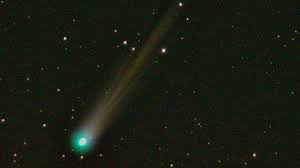
A comet is a small celestial object made primarily of ice, dust, and rocky material. Often referred to as “dirty snowballs,” comets orbit the Sun and develop a glowing coma (a fuzzy atmosphere) and sometimes a spectacular tail when they get close to the Sun.
The word “comet” comes from the Greek word komētēs, meaning “long-haired,” which perfectly describes the glowing tail that trails behind it.
Key Features of a Comet
- Nucleus: The solid core made of ice and dust
- Coma: A glowing cloud surrounding the nucleus
- Tail: A bright trail formed by solar radiation and solar wind
How Do Comets Form?
Comets are believed to be remnants from the early solar system, formed about 4.6 billion years ago. They originate mainly from two distant regions:
- Kuiper Belt: A disk-shaped region beyond Neptune
- Oort Cloud: A spherical cloud far beyond the Kuiper Belt
These regions are like cosmic storage zones for icy bodies. Occasionally, gravitational disturbances send comets hurtling toward the inner solar system.
Types of Comets
Understanding the types of comets is essential for both astronomy enthusiasts and researchers.
1. Short-Period Comets
- Orbit the Sun in less than 200 years
- Originate from the Kuiper Belt
- Example: Halley’s Comet
2. Long-Period Comets
- Take thousands or even millions of years to orbit the Sun
- Come from the Oort Cloud
- Often appear unexpectedly
3. Non-Periodic Comets
- Pass through the solar system only once
- Never return due to altered trajectories
Famous Comets in History
Throughout history, several famous comets have captured human imagination and contributed to scientific discovery.
1. Halley’s Comet
Perhaps the most famous comet, visible from Earth every 76 years. It was last seen in 1986 and will return in 2061.
2. Comet Hale–Bopp
One of the brightest comets of the 20th century, visible to the naked eye for over a year.
3. Comet NEOWISE
A recent comet that amazed skywatchers worldwide with its stunning tail.
Why Are Comets Important?
Comets are not just beautiful—they are scientifically valuable. Here’s why:
1. Clues to the Early Solar System
Comets contain primitive material that has remained unchanged since the formation of the solar system.
2. Source of Water on Earth
Some scientists believe comets may have delivered water and organic compounds to Earth, contributing to the origin of life.
3. Space Exploration Targets
Missions like ESA’s Rosetta have studied comets up close, revealing their composition and behavior.
What Happens When a Comet Approaches the Sun?
As a comet gets closer to the Sun, it heats up. The ice begins to vaporize, releasing gas and dust. This process creates:
- A glowing coma
- A bright tail that can stretch millions of kilometers
Interestingly, the tail always points away from the Sun due to solar wind.
Difference Between Comets, Asteroids, and Meteors
Many people confuse comets with other space objects. Let’s clarify:
| Object | Composition | Appearance |
|---|---|---|
| Comet | Ice, dust, gas | Glowing tail |
| Asteroid | Rock and metal | No tail |
| Meteor | Burning debris | Streak of light in sky |
Can a Comet Hit Earth?
While it’s rare, comets can collide with planets. However, the chances of a comet hitting Earth are extremely low. Scientists continuously monitor near-Earth objects to ensure planetary safety.
How to See a Comet from Earth
Watching a comet can be a magical experience. Here are some tips:
- Check astronomy apps for visibility updates
- Choose a dark location away from city lights
- Use binoculars or a telescope for a better view
- Be patient—comets don’t appear frequently
Comets in Culture and Mythology
Historically, comets were often seen as omens or signs of change. Ancient civilizations associated them with:
- Wars and disasters
- Royal births or deaths
- Divine messages
Today, we understand comets scientifically, but their mystical charm remains.
Future of Comet Research
With advancements in technology, scientists continue to explore comets more deeply. Future missions aim to:
- Collect samples from comet surfaces
- Study their chemical composition
- Understand their role in planetary formation
Conclusion: Why Comets Still Fascinate Us
The comet remains one of the most captivating objects in the universe. From their glowing tails to their ancient origins, comets connect us to the beginnings of our solar system.
Whether you’re an astronomy enthusiast or just someone who enjoys stargazing, understanding comets adds a new layer of wonder to the night sky. As science advances, these icy travelers will continue to reveal secrets that could reshape our understanding of the universe.
SEO Keywords Used Naturally
- comet
- comet meaning
- types of comets
- famous comets in history
- what is a comet
